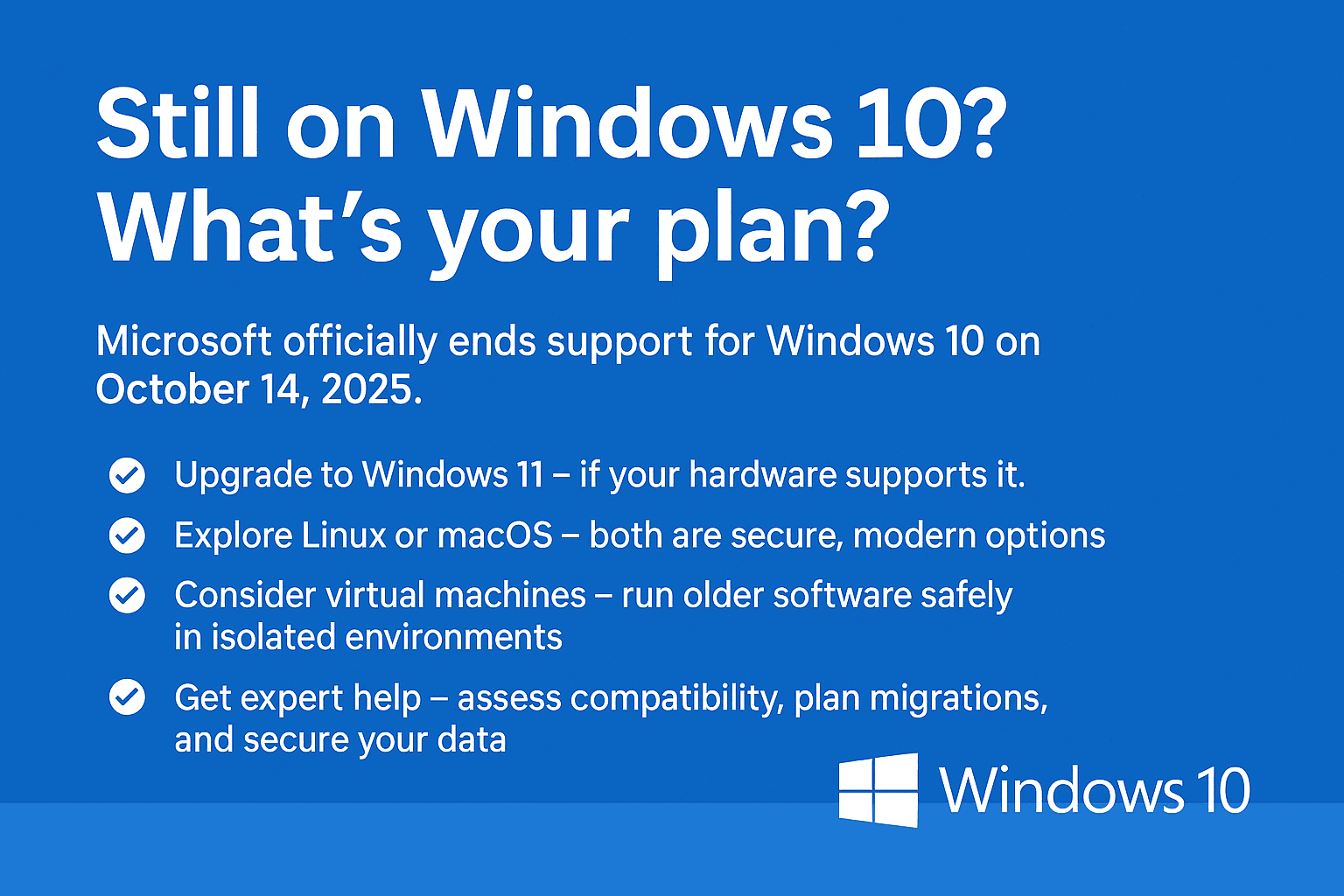
Windows 10 End of Life 2025: Upgrade, Replace, or Switch?
Windows 10 support ends October 14 2025. Protect your business before it’s too late.

A while back, I nearly fell for a scam on LinkedIn—and it’s the clearest argument I know for cybersecurity awareness training.
I run RPM Computing, an IT provider here in Huntsville, and I’ve spent 35 years around this stuff. I know the red flags. And I still let my guard down for a second. That’s the part worth paying attention to—because if it can catch someone who does this for a living, it can catch anyone on your team.
Here’s what happened, and what it means for your business.
It started with a connection request. Nothing unusual. The person had clearly done their homework—they knew my industry, my connections, the kind of work I do. So I accepted.
The moment I did, they had a window into my activity, my posts, and my network. That access is the whole point. Scammers use it to look legitimate before they make their move.
A day later, the “move” arrived: an email that looked like a job opportunity. But something was off. The spelling was clumsy, the grammar was awkward, and there was a hard push to click a link right now. That urgency is the tell. I stopped, verified, and reported it.
Caught it in time. But it was closer than it should have been.
When I tell this story, most owners nod along and think, “I’d never click that.”
Maybe not. But you’re not the risk. Your team is.
You might have 15, 30, 50 people using email and LinkedIn every day. Your newest hire. Your office manager juggling twelve things. The person covering the front desk on a busy Monday. It only takes one distracted click on one convincing email for an attacker to get into your systems—and from there, into your client data.
For a small business, that’s not a minor headache. A single successful phishing attack can mean:
Client data exposed, and the trust that goes with it
Compliance violations if you handle regulated information
Days of downtime and real recovery costs
A reputation hit that’s hard to walk back
Most break/fix IT doesn’t touch this. It fixes what’s already broken. The gap is the human layer—the people clicking the links—and that gap is where most breaches actually start.
You don’t need a security degree to spot most scams. Share these with everyone on your staff:
Email from someone you rarely hear from. Sudden contact after silence deserves a second look.
Spelling and grammar that feel off. Sloppy writing is one of the most reliable scam signals.
Pressure to act immediately. Urgency is a manipulation tactic. Slow down.
An email address that doesn’t quite match. Hover, read carefully, and verify the sender.
The rule I live by: trust but verify. If an email or text feels wrong, pick up the phone and confirm directly. It takes thirty seconds and it stops nearly every one of these attacks cold.
The reason I caught that LinkedIn scam wasn’t luck. It was habit. Years of pausing before I click.
Your team can build that same habit, but it doesn’t happen on its own. That’s what cybersecurity awareness training does: it teaches your people to recognize threats, tests them with realistic simulations, and turns “I’d never click that” into something that’s actually true. It’s not a one-time seminar—it’s an ongoing habit you build across your whole staff.
This isn’t just our opinion. The FBI’s Internet Crime Complaint Center reports billions in losses every year from phishing and business email compromise—the exact attacks that awareness training is built to stop.
At RPM Computing, cybersecurity awareness training is part of how we protect the small businesses we work with across Huntsville and the Tennessee Valley. Human-directed, AI-accelerated—we give your team the awareness and the tools to close the gap that most IT support ignores.
If you’ve never done it, here’s what a real program looks like—not a slideshow your team clicks through and forgets.
Phishing simulations. We send safe, realistic fake attacks to your team and see who clicks. No blame—it just shows you where the risk is so you can fix it before a real attacker finds it.
Practical, short lessons. People don’t have time for hour-long courses. Effective training comes in small, frequent pieces that fit into a real workday.
Coverage for the whole team. The owner isn’t the target—the busy front desk and the new hire are. Everyone with an email address needs the same baseline awareness.
Tracking over time. You want to see click rates drop quarter over quarter. That trend is the proof the training is working, and it’s exactly the kind of evidence that helps if you ever face a compliance audit.
For a growing Huntsville business, this is one of the highest-value, lowest-cost security steps you can take. It doesn’t require new hardware or a big budget—just a consistent habit built across your staff.
That LinkedIn scam didn’t catch me because I’ve built the habit of stopping before I click. Your team can build the same habit—but only if someone teaches it and keeps it fresh.
Break/fix IT waits for something to go wrong. Cybersecurity awareness training stops it before it starts. For a business handling client data, that difference is worth real money.
Worried one click could take down your business? Let’s find out where you actually stand. Call RPM Computing at (256) 870-8850 for a straightforward conversation about protecting your team—no jargon, no pressure.
Windows 10 support ends October 14 2025. Protect your business before it’s too late.
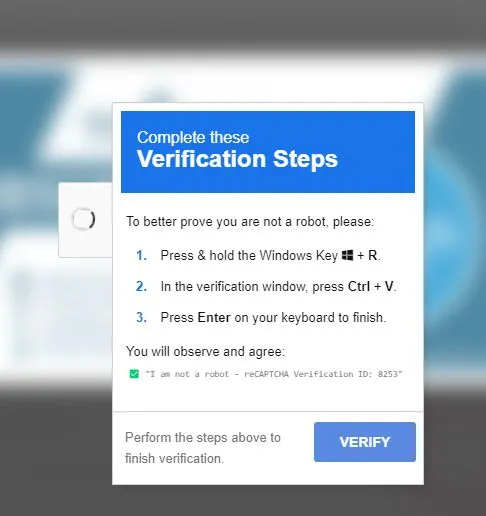
Cybercriminals are using fake CAPTCHA websites to hijack clipboards and install malware. Find out how this scam works and what steps you can take to stay safe online. 🚨 Read more here!